

How SEO services work
What a full SEO engagement covers, month by month
People buy SEO services without a clear picture of what happens after they sign. Here’s how a typical engagement runs with me, so you know what you’re paying for in each phase.
Month 1: audit and plan
The first month is mostly diagnosis. I crawl the site, read your Search Console data, check which keywords you rank for today and look closely at the three to five competitors who keep beating you. The output is a keyword map, which is a simple table that assigns each target keyword to exactly one page. If two pages are fighting over the same keyword, one of them gets merged, redirected or re-angled.
I also fix the urgent problems in month one. That usually means broken redirects, pages blocked from indexing, missing titles or a slow template. If the site has deeper problems, I’ll scope them as technical SEO work, because those fixes are bigger and need their own plan.
Months 2 and 3: fix and publish
This is where the visible work happens. The pages that already rank on page 2 get rewritten first, because they’re the closest to paying off. I tighten the titles and headings, rewrite the copy so it answers the search better than the current top result, add internal links from related pages and add schema where it helps.
New pages come next. For most service businesses, that means one strong page per service and, if you serve several areas, location pages that say something specific about each place. If you depend on map results, this work overlaps with local SEO, and I’ll usually run both together.
Month 4 onward: authority and growth
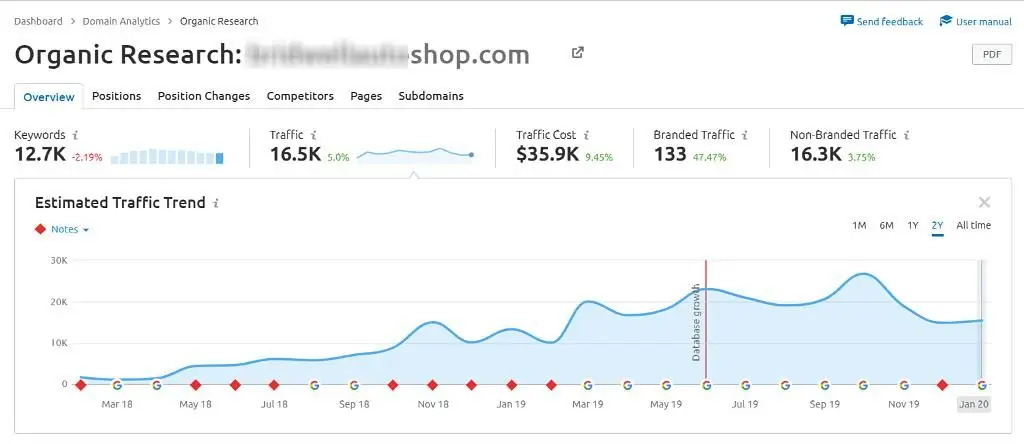
Once the site’s foundations are solid, the work shifts toward authority. That means earning links and mentions from other sites, publishing content that answers the questions buyers ask before they’re ready to call, and steadily widening the set of keywords you rank for. Every month I check what moved, double down on what’s working and cut what isn’t.
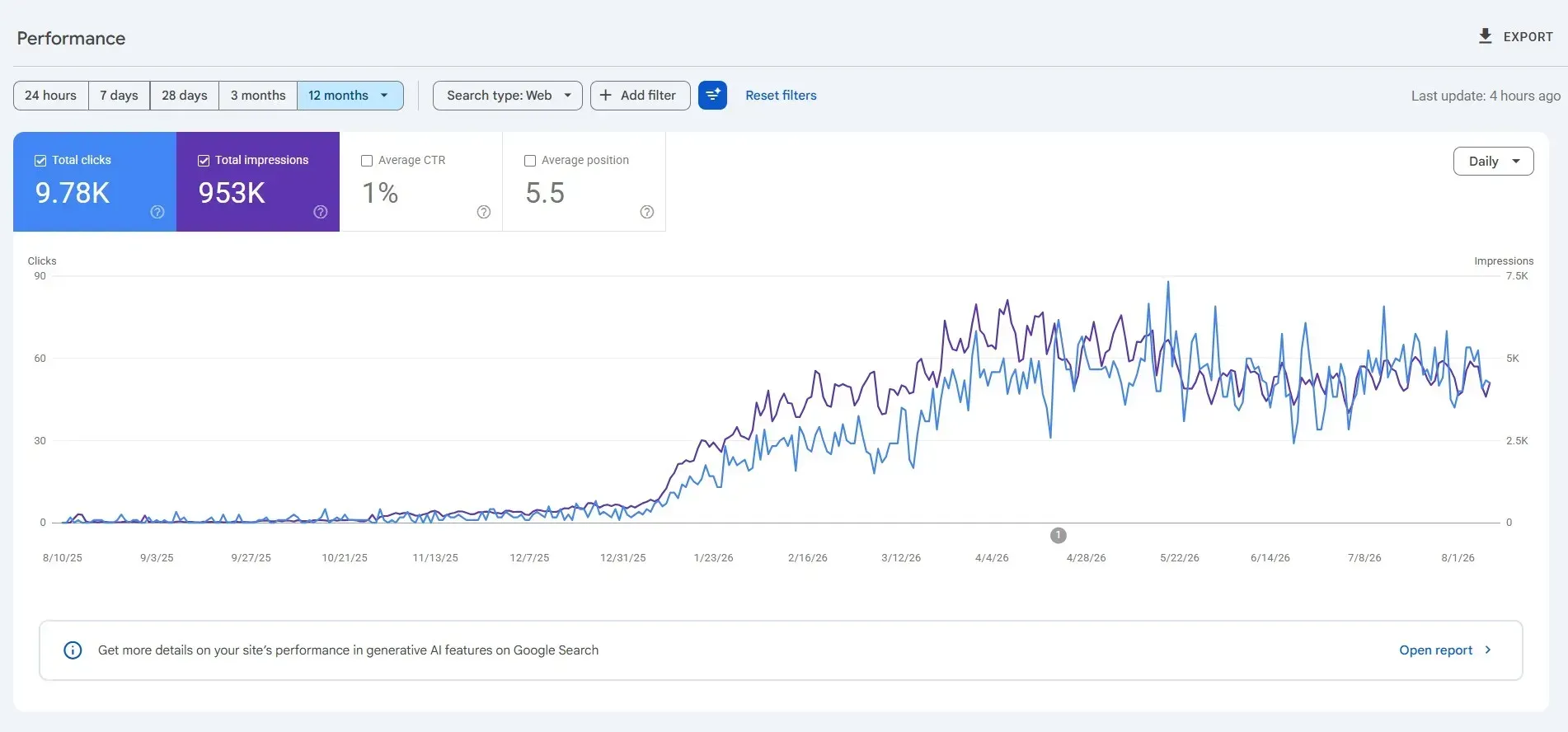
This is what that curve looks like in practice. Here’s Google Search Console for an orthopaedic surgeon’s site in London over 12 months, with clicks and impressions climbing steadily once the new pages and on-page work were in place:
Why rankings stall
When a site stops growing, it’s rarely because of one big problem. It’s usually a mix of a few common ones.
Thin pages
A service page with 150 words, a stock photo and a contact form has very little for Google to rank. The pages that win usually explain the service properly: who it’s for, what’s included, what it costs, how long it takes and what the customer should do next. That’s what searchers want, and it’s what gives Google enough to work with.
Keyword cannibalization
Cannibalization means several pages target the same keyword, so Google can’t tell which one matters. It’s very common on sites that publish blog posts about the same topic as their service pages. The fix is a clear keyword map and a few redirects or merges, and it often produces some of the fastest gains in an engagement.
No links
Content and on-page work get you into the race, and links decide how far up you finish. A site with no links from other websites will struggle against competitors that have been earning them for years. Good link building is slow and manual. It means finding sites where your business genuinely belongs and giving them a reason to mention you.
Search is changing
More searches now end in an AI-generated answer instead of a click. Classic SEO still matters, because AI tools lean heavily on pages that already rank, but it’s worth making sure your brand shows up in those answers too. That’s what AI SEO covers, and it builds on the same foundations as the work above.
How outsourcing SEO to a Philippines specialist works in practice
If you haven’t worked with an offshore specialist before, the practical side is simpler than most people expect.
- Communication. We use email or Slack day to day, with a scheduled call when there’s something worth discussing. I reply within one business day, and usually much sooner.
- Access. I’ll ask for access to Search Console, Google Analytics, your website and your Google Business Profile. You keep ownership of every account, and you can remove my access at any time.
- Approvals. You approve new pages and major changes before they go live. Routine fixes go ahead without waiting on you, and they’re all listed in the monthly report.
- Time zones. I work hours that overlap with the US, UK and Australia, so questions don’t sit for a day before anyone sees them.
The main advantage is cost. Senior SEO work from the Philippines costs a fraction of a US or UK agency, which leaves more of your budget for content and links, and those are what move rankings.
Red flags when hiring an SEO
Whoever you hire, watch for these warning signs:
- Guaranteed rankings. Nobody controls Google. An SEO who promises the #1 spot is either guessing or planning shortcuts that can get you penalized.
- Secret methods. Good SEO is not mysterious. If someone can’t explain what they’ll do and why, assume the work is thin.
- Reports full of vanity numbers. Impressions and “keywords tracked” look impressive but don’t pay your bills. Ask how the report connects to calls and leads.
- Cheap link packages. A thousand links for a low monthly fee almost always means spam, and Google is good at ignoring it or worse.
- No access for you. You should own your analytics, Search Console and website accounts. If an agency keeps them in their own name, leaving them becomes painful.
If you want SEO that’s planned around the pages that bring in customers, and a site that’s built to rank from the start, tell me about your business below and I’ll send a fixed quote.