Skip to content
Aaron CarmenAaron Carmen

Local SEO

Local SEO Services That Put You in the Map Pack

Most local buyers pick from the top 3 results in Google Maps. I get your business into that box and keep it there.

  • ★★★★★100% Job Success on Upwork
  • Since 2013
  • Clients in US · UK · AU · CA · PH

Who it's for

For businesses that win or lose on local searches

If customers find you by searching for a service plus a place, the map pack is where the decision happens. Clinics, dentists, contractors, law firms and restaurants live or die by those three spots. I work with service-area and storefront businesses in the US, UK, Australia and the Philippines.

You need this if...

  • You're not in the top 3 when someone searches "[your service] near me"
  • Your Google Business Profile is half filled in, or hasn't been touched in months
  • Reviews trickle in slowly, and some have never been answered
  • You serve several areas or locations but have one weak page covering all of them
  • Competitors with fewer years in business show up above you in Maps

What's included

What local SEO includes

  • Google Business Profile optimization

    Categories, services, attributes, photos, products and regular posts, filled in properly and kept current.

  • Citation building and cleanup

    Your name, address and phone number made consistent across the directories and data sources Google trusts.

  • Review generation system

    A simple, policy-safe way to ask every happy customer for a review, plus help replying to the ones you get.

  • Location and service-area pages

    A useful page for each area or location you serve, with real local detail instead of swapped city names.

  • Local schema

    Structured data that tells Google exactly who you are, where you are and what you offer.

  • Local link building

    Links and mentions from local news, chambers, associations, sponsors and partners in your area.

  • Map pack rank tracking

    Rankings checked across a grid of points around your location in BrightLocal or Local Falcon, so you see where you win and where you don't.

  • Monthly calls and leads report

    Calls, direction requests, form leads and map rankings, explained in plain English every month.

Process

How local SEO runs

  1. Step 1: Local audit.

    I check your Google Business Profile, citations, reviews and the competitors who hold the top 3 today.

  2. Step 2: Fix GBP and NAP data.

    Your profile gets completed and your name, address and phone number made consistent everywhere.

  3. Step 3: Build pages, citations and reviews.

    Location pages go live, citations get built and the review system starts running.

  4. Step 4: Track grid rankings and report.

    Monthly grid tracking shows where you rank across your area, and the report ties it to calls and leads.

Results

Results from this kind of work

Each project was designed, built and optimized by one person, then measured in calls, not compliments.

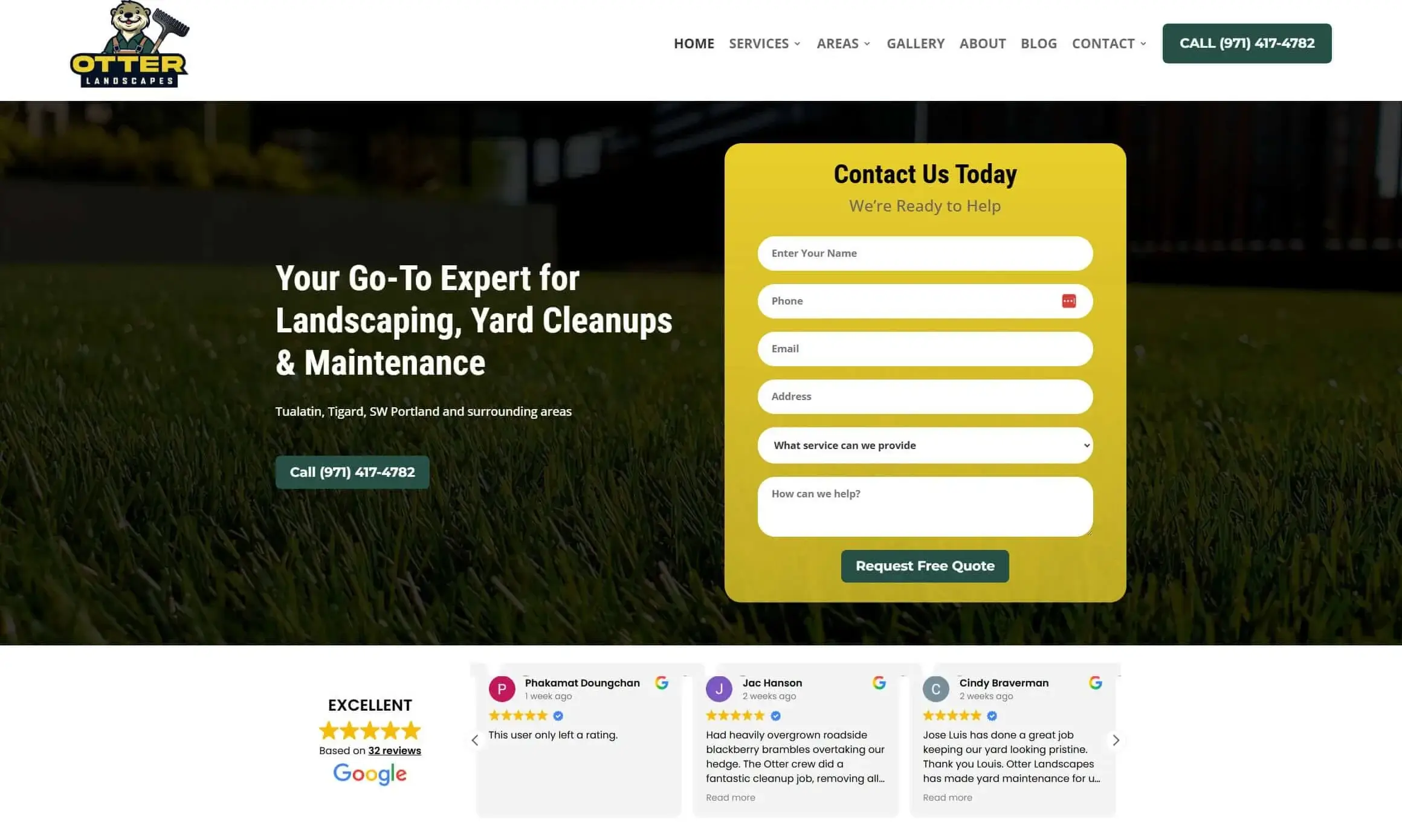
  • Otter Landscapes home page, built and optimized by Aaron Carmen

    [01]LandscapingTualatin, OR

    Otter LandscapesRanked #1 in Google Maps for "yard cleanup tualatin" in under 60 days

    Maps: yard cleanup
    #14 to #1
    Maps: landscape maintenance (Tualatin)
    #1
    New clients
    2 to 3 per day
    Read the full case study: Otter Landscapes
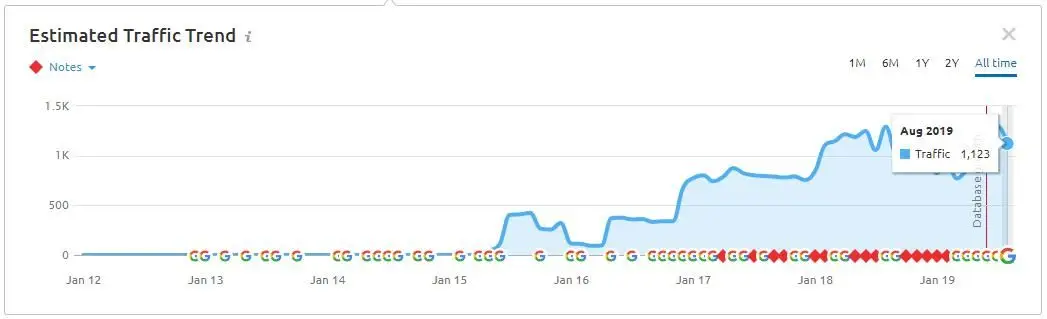
  • Semrush estimated traffic trend for the self storage facility's website, rising to over 1,100 monthly visits

    [02]Self storage

    Self storage facilityVacant units cut from 166 to 46 in four months

    Vacant units
    166 to 46
    Calls
    30+ per month
    Website traffic
    +507.5%

    A 400-unit facility. Results measured four months after work started.

See all client results

Working with Aaron has been an absolute pleasure. He's a true professional, detail-oriented, and extremely responsive throughout the project. Aaron took the time to understand my goals and transformed them into a clean, modern, and high-performing website.

Jesus LemusOtter Landscapes, Tualatin, OR

Pricing

How pricing works

The price depends on how many locations you have, how competitive your area is and how much cleanup your listings need first.

Pricing model
One-time setup, then a monthly retainer per location
Starts at
$500 a month

You get a fixed quote before any work starts, so you know the full cost up front.

Ask for a quote

How local SEO works

How the map pack decides who ranks

Google says local rankings come down to three things: relevance, distance and prominence. Knowing what each one means in practice tells you where to spend your effort.

Relevance

Relevance is how well your business matches what was searched. It comes mostly from your Google Business Profile: your primary and secondary categories, the services you list, your business description and the words customers use in reviews. It also comes from your website. A page that clearly explains a service in a specific area gives Google a strong signal that you’re a match.

The most common relevance mistake is the wrong primary category. If you’re a cosmetic dentist and your primary category is “Dentist”, you’ll struggle for cosmetic searches against practices that chose more precisely. It takes a few seconds to change, and it often has a visible effect.

Distance

Distance is how far your business is from the searcher, or from the location in their search. You can’t change where you are, and nobody can fake proximity for long. This is why grid tracking matters. It shows that you might hold #1 two streets from your office and drop to #9 five kilometres away. The goal is to widen the area where you rank well, mostly by growing prominence.

Prominence

Prominence is how well known and trusted your business is. Google looks at review count, rating and recency, links and mentions from other websites, citations across directories, and how strong your website is overall. Most of the work in a local SEO engagement goes here, because it’s the factor you have the most control over.

The Google Business Profile fields most businesses skip

Most profiles have the basics: name, address, phone and opening hours. The ones that win usually have much more:

  • Secondary categories that cover every service you actually offer.
  • Services and products, each with a short description written in your customers’ words.
  • Attributes, like wheelchair access, online appointments or “identifies as women-owned”, where they apply.
  • Photos uploaded regularly, showing the team, the premises and real work. Not just the logo.
  • Posts for offers, updates and events, which keep the profile active.
  • Questions and answers, seeded with the questions customers really ask, and answered.

None of this is complicated. It just takes time, and most business owners never get to it. That’s why a fully built profile is still a real edge.

A review strategy that works and stays within the rules

Reviews affect both rankings and whether people call you. The businesses with the most reviews aren’t usually the best. They’re the ones that ask every customer, every time.

A good system is simple. Send a short message with a direct review link right after the job is done, when the customer is happiest. Make it one tap. Reply to every review within a few days, including the negative ones, calmly and specifically. Future customers read the replies as closely as the reviews.

There are also things to avoid. Don’t offer discounts for reviews, don’t only ask customers you know are happy (“review gating”), and never buy reviews. Google’s policies prohibit all three, and the penalties range from deleted reviews to a suspended profile.

Service-area businesses versus storefronts

A storefront business has an address where customers visit, like a clinic, shop or restaurant. A service-area business goes to the customer, like a plumber, landscaper or cleaner. Google treats them differently, and setting up the wrong type causes problems.

Service-area businesses should hide their address in the profile and list the areas they serve. They still rank around the location they verified from, so proximity still matters. Storefronts should show their address, and the website should make it easy to find, with directions, parking details and an embedded map.

If you’re both (an office that customers visit, plus a team that travels), set the profile up as a storefront with service areas added. If you’re unsure, I’ll check your setup during the local audit.

Location page mistakes that get pages ignored

Location pages are where many local campaigns go wrong. Typical mistakes:

  • Swapping the city name. Ten pages with identical copy and a different city in the heading look like doorway pages, and Google tends to ignore them.
  • Pages for places you don’t serve. If you’ve never worked in a suburb, a page about it won’t convert even if it ranks.
  • No proof. A good location page shows jobs done in that area, reviews from local customers, local landmarks or regulations, and how quickly you can get there.
  • Orphan pages. A location page that nothing links to is hard for Google to find. Link to them from your service pages and footer.

Location pages are part of the website itself, so I plan them together with the site structure rather than bolting them on later.

Where local SEO fits with everything else

Local SEO is often the fastest way for a service business to get more calls, but it works best alongside the rest of your search presence. Strong SEO services build the organic rankings below the map. A fast, well-structured site, sometimes helped by a technical SEO cleanup, makes every local signal count. And as more people ask AI assistants to recommend a local business, the same profile, review and citation work feeds into AI SEO too.

If you’re not in the top 3 for the searches that matter to you, tell me where you are and what you do below, and I’ll send a fixed quote.

Why me

Why work with me

  • Proven in the map pack: Otter Landscapes went from #14 to #1 in Google Maps for their main service in under 60 days.

  • I build location pages and fix the website myself, so local SEO and the site never pull in different directions.

  • Nine and a half years inside a dental marketing agency, where local search decides how many new patients walk in.

  • I work with local businesses in the US, UK, Australia and across the Philippines.

Industries

Free SEO guides for the trades I work with most.

All industry guides

FAQ

Local SEO questions

How long until I show up in Google Maps?

It depends on how competitive your area is and the state of your profile today. Fixing an incomplete or inconsistent profile often moves rankings within 4 to 8 weeks. Breaking into a crowded top 3 can take several months of steady review, citation and page work. Grid tracking shows the progress area by area, so you can see it happening.

Do I need a physical address?

No. Service-area businesses, like plumbers or cleaners who visit customers, can rank in Maps without showing their address. You set your service areas instead. You do need a real business location that Google can verify, though. Virtual offices and coworking addresses usually break Google's guidelines and can get a profile suspended.

How do you get more reviews without breaking Google's rules?

By asking every customer, not just the happy ones, at the right moment and with as little effort for them as possible. That usually means a short link sent by text or email right after the job. I never buy reviews, offer incentives for them or filter who gets asked, because Google prohibits all three and can remove reviews or suspend profiles for it.

Can you handle multiple locations?

Yes. Each location gets its own Google Business Profile, its own landing page with real local detail, and its own rank tracking. Multi-location work is priced per location, because each one needs its own citations, reviews and monitoring. Head office still gets one combined monthly report.

Do you do local SEO for Philippine businesses?

Yes. I work with businesses in Metro Manila, Cebu, Davao and across Mindanao who want to rank on Google.ph and in Maps. The fundamentals are the same as in the US or UK, but the directories, review habits and competition are different, so the plan is built around the Philippine market.

What's the difference between local SEO and regular SEO?

Local SEO focuses on searches with local intent, such as "dentist near me" or "roof repair Cebu", where Google shows a map with three businesses. Rankings there depend heavily on your Google Business Profile, reviews and proximity. Regular SEO targets the organic results under the map and searches with no local intent. Most local businesses need both.

From the blog

Guides on this topic

All articles

Related

  • SEO Services

    Keyword strategy, on-page fixes, content plans and link building that move pages up and keep them there.

    Learn more about SEO Services
  • Web Design

    Clean, fast designs planned around how people search and buy. Built to convert, not just to win compliments.

    Learn more about Web Design
  • AI SEO

    Get cited in Google AI Overviews, ChatGPT and Perplexity with entity-driven content and structured data.

    Learn more about AI SEO

Contact

Get a quote for local SEO

Tell me about your business and your site. Say what you want to achieve and I'll reply within one business day with any questions, then a fixed quote.

  • Reply within one business day
  • No obligation, no hard sell
  • Form and email only, calls optional
What you need

Prefer email? hello@aaroncarmen.com